Sports guide
A Basketball Fan Guide to Defensive Matchups
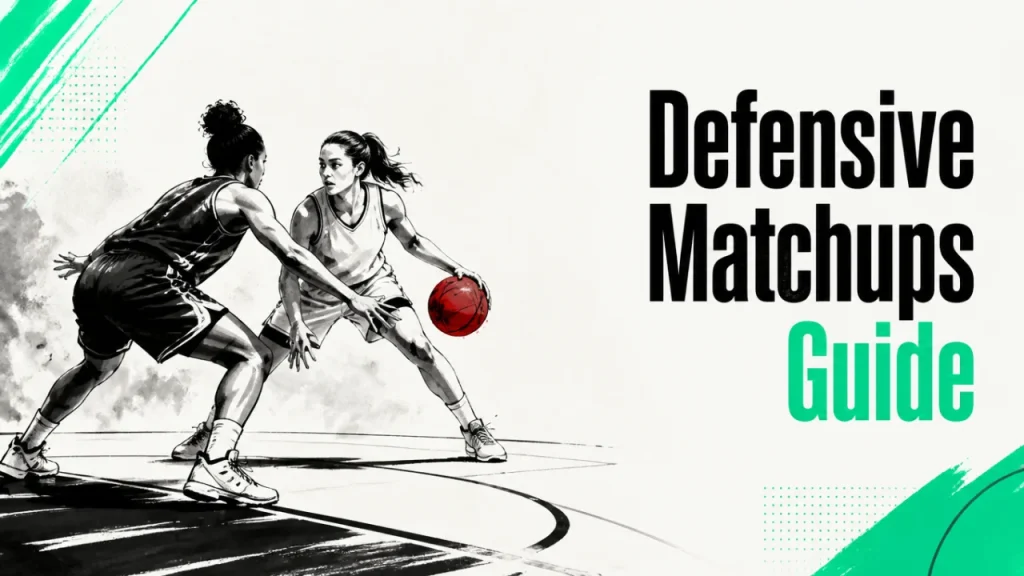
In basketball, understanding defensive matchups is key to appreciating the tactical battles on the court. A defensive matchup refers to how a team assigns its players to guard the opposing team’s players, aiming to limit their scoring opportunities and disrupt their offensive flow. This involves more than just one-on-one defense; it encompasses a dynamic system of assignments, switches, and help defense that coaches meticulously plan.
Understanding Defensive Assignments
The most basic aspect of a defensive matchup is the initial assignment. Coaches typically try to match players based on their physical attributes and skill sets to create the most advantageous defensive scenario. For instance, a taller, stronger defender might be assigned to guard an opposing team’s dominant interior scorer, while a quicker, agile defender might track a fast perimeter player.
- Size and Strength: Matching a player’s height and build against a similar opponent can neutralize advantages. If an opponent has a strong post player, assigning a defender with comparable strength can make it harder for them to establish position and score close to the basket.
- Speed and Agility: For guards and wings, matching speed is crucial. A defender with good lateral quickness can stay in front of a shifty ball-handler, preventing easy drives to the basket or open jump shots.
- Skill Set: Sometimes, defenders are assigned based on their specific defensive skills. A player known for their shot-blocking ability might be tasked with guarding an opponent who frequently attacks the rim, even if there’s a slight size mismatch. Similarly, a defender excellent at navigating screens might guard an opponent who relies heavily on screen plays.
The Role of Strategic Switches
While initial assignments are important, basketball is a fluid game.
Defensive switches are a core part of modern basketball strategy, particularly against offenses that rely heavily on screens. A switch occurs when two defenders exchange assignments during a play. Instead of fighting through a screen, which can leave a defender trailing and out of position, the defender guarding the screener takes on the ball-handler, and the original defender switches to guard the screener.
- Preventing Open Shots: The primary goal of switching is to prevent an offensive player from getting an open look at the basket, especially after a screen. By switching, there’s always a defender immediately engaged with the ball-handler.
- Communication is Key: Effective switching requires excellent communication between defenders. A clear call of “switch!” ensures both players understand the change in assignment and can react quickly.
- Managing Mismatches: While beneficial, switching can also create temporary mismatches. If a smaller guard switches onto a larger forward, the forward might try to exploit that size advantage in the post. Teams must be prepared to provide
help defense
to mitigate these mismatches.
The Importance of Help Defense Positioning
No defender can guard their opponent effectively in isolation for an entire game.
Help defense
is a critical component of a strong overall defensive scheme, where players move from their assigned opponent to temporarily guard another offensive player, usually the one with the ball, when their primary defender is beaten or a mismatch occurs.
- Rotations: When help defense is provided, other defenders must rotate to cover the now-open offensive player, preventing an easy pass for a score. This chain reaction of defensive movement is known as a rotation.
- Protecting the Paint: Help defense is particularly vital in protecting the area directly under the basket. If a ball-handler drives past their initial defender, a teammate stepping in to block the path or challenge the shot can prevent easy points. This often means leaving their assigned player for a moment, trusting teammates to cover the rotation.
- Recovering to Assignments: After providing help, defenders must quickly recover to their original assignments or new assignments established through rotations. This quick recovery minimizes the time an offensive player is left unguarded.
By observing how teams manage defensive assignments, execute switches, and provide timely help defense, fans can gain a deeper appreciation for the strategic nuances that define success on the basketball court.
AI-generated illustrative image. It does not depict a real match.